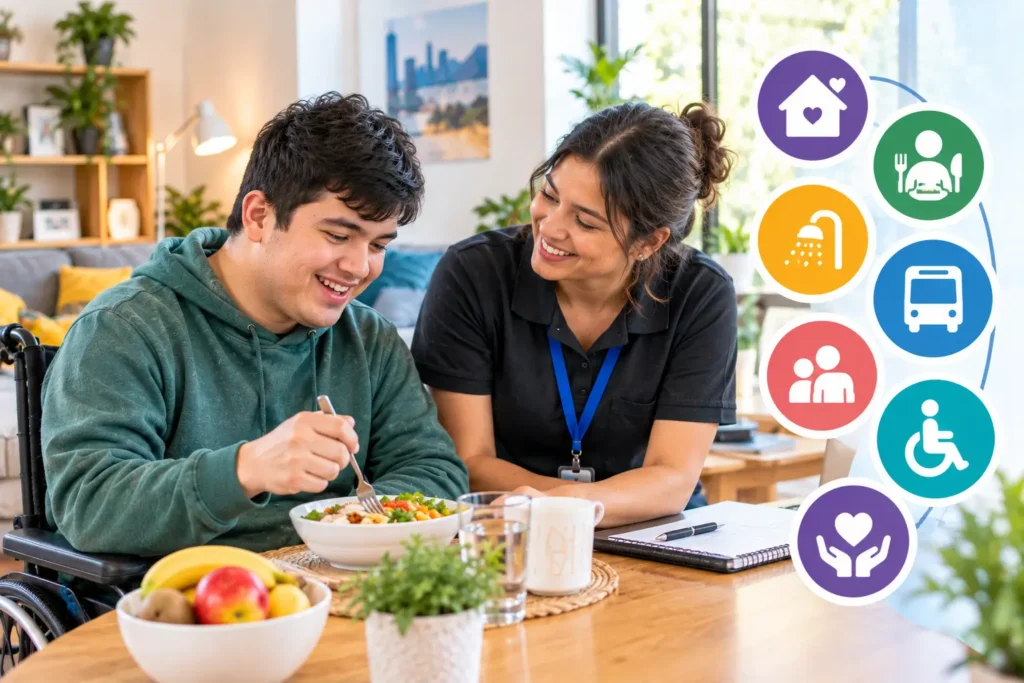

NDIS Daily Living Skills | Proven Help for Independent Living
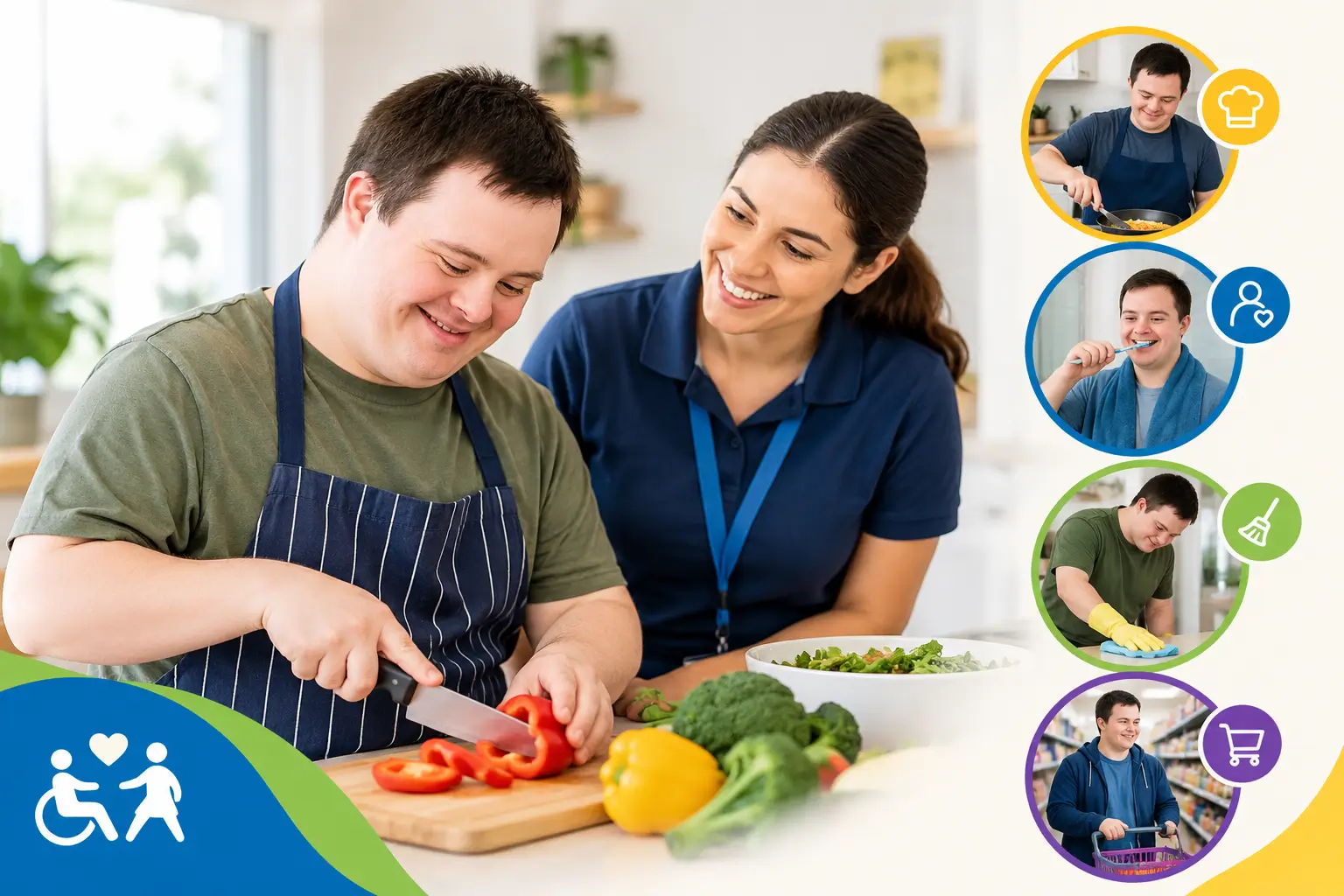
NDIS daily living skills can help participants learn and practise the practical skills they need for everyday life. These skills can include cooking, cleaning, personal routines, shopping, communication, planning and taking part in the community.
For some people, everyday tasks can be difficult without the right support. NDIS support may help a participant practise these tasks at their own pace while working towards the goals in their NDIS plan.
Building skills does not mean that a person has to do everything alone. The right support can help someone take part in tasks, make choices and become more confident with activities that matter to them.
What Are NDIS Daily Living Skills?
NDIS daily living skills are the practical skills a person may use to manage everyday activities at home and in the community.
These skills can be different for every participant. One person may want to learn how to prepare simple meals. Another person may want to improve their morning routine, learn how to use public transport or become more comfortable with shopping.
Examples of daily living skills include:
- Preparing meals and cooking
- Cleaning and organising the home
- Personal care routines
- Choosing and buying groceries
- Following a daily routine
- Managing appointments
- Using public transport
- Communicating with other people
- Making everyday decisions
- Taking part in community activities
- Learning how to stay safe at home
- Building confidence with household tasks
The NDIS explains that Improved Daily Living supports can help participants build living skills and increase their independence and involvement in the community. These supports may include assessments, training and therapies depending on the participant’s needs and plan.
Why Are NDIS Daily Living Skills Important?
Everyday skills can have a direct effect on how a person manages their routine and takes part in daily life.
When someone has difficulty with cooking, cleaning, communication or planning, even a simple task can become stressful. Learning these skills step by step may make daily activities easier to manage.
NDIS daily living skills support can also give participants opportunities to practise tasks instead of always having someone complete the task for them.
For example, a support worker may help a participant prepare a meal. Instead of doing everything for the participant, the worker may guide them through choosing ingredients, preparing food and cleaning up afterwards.
The type and amount of support should depend on the participant’s needs, preferences and goals.
What NDIS Daily Living Skills Can You Learn?
There are many skills that may be useful in everyday life. The right skills will depend on what the participant wants to achieve.
1. Cooking and Meal Preparation
Cooking is an important life skill for many people. A participant may work on simple tasks such as choosing a meal, making a shopping list, preparing ingredients, using kitchen equipment safely and cleaning the kitchen afterwards.
The goal does not always have to be preparing a complete meal independently. A participant may start with one small part of the process and build from there.
2. Cleaning and Household Tasks
Household tasks can include cleaning surfaces, putting items away, doing laundry, changing bed linen and keeping personal spaces organised.
Support can help a participant understand how to complete these tasks safely and develop a routine that works for them.
3. Personal Routines
Daily routines can include getting ready in the morning, dressing, personal hygiene, preparing meals and getting ready for appointments or activities.
Some participants may need hands-on assistance, while others may benefit from reminders, supervision or help with planning.
4. Shopping Skills
Shopping can involve more than buying food. A participant may learn how to make a list, choose products, find items in a shop, communicate with staff, pay for purchases and bring items home safely. These skills can also support participation in the community.
5. Communication Skills
Communication is part of many everyday activities. A participant may want to practise asking for help, explaining what they need, speaking with service providers, communicating with other people or making choices about their support. The type of communication support needed will vary from person to person.
6. Planning and Organisation
Planning can help a participant manage appointments, activities and household routines. Support may include using a calendar, setting reminders, preparing for appointments or organising tasks for the day. Small changes to a routine can sometimes make everyday activities easier to follow.
How NDIS Daily Living Skills Support Can Build Confidence
Learning a new skill can take time. Some participants may need repeated practice before they feel comfortable with a task.
A support worker can provide guidance while allowing the participant to take part as much as possible.
For example, if a participant is learning to prepare breakfast, the support worker might first explain the steps. The participant could then complete some of the easier tasks while receiving help when needed.
Over time, the participant may be able to complete more of the activity themselves.
This approach can help make support more personal because the focus is not simply on completing a task. It is also about helping the participant work towards skills that are meaningful to them.
Examples of Improved Daily Living Skills
Improved daily living skills can look different for every person.
For one participant, progress may mean preparing a simple breakfast without assistance.
For another participant, it may mean remembering the steps in a morning routine.
Someone else may want to learn how to travel to a local activity, communicate with people at a shop or manage part of their household routine.
Some examples of progress include:
- Preparing a simple meal
- Following a morning or evening routine
- Cleaning part of the home
- Doing laundry with less assistance
- Making a shopping list
- Choosing suitable groceries
- Attending an appointment
- Using public transport with support
- Communicating needs more clearly
- Taking part in a community activity
- Making everyday choices
- Asking for help when needed
Progress does not have to mean doing everything without support. A participant may still need assistance while becoming more involved in the activity.
How NDIS Capacity Building Relates to Daily Living Skills
Capacity building is another important part of NDIS support.
The NDIS describes capacity building supports as funding that can help participants develop skills and work towards their goals. The Improved Daily Living category includes supports that can help build living skills, independence and involvement in the community.
This means daily living skills may be part of a wider plan to help a participant develop practical abilities.
For example, a participant may have a goal related to becoming more confident at home. Their support may focus on cooking, household routines and planning.
Another participant may have goals related to community participation. Their support may focus on communication, transport skills and taking part in local activities.
The support should be connected to the participant’s individual needs and NDIS plan.
NDIS Daily Living Skills and Independent Living
Independent living does not mean that a person must manage everything without assistance.
For many participants, independent living can mean having more choice and involvement in the way they manage everyday activities.
A participant may still need a support worker but become more involved in deciding what they want to eat, preparing part of a meal, choosing an activity or planning their day.
This can be an important part of developing independent living skills NDIS participants can use in everyday situations.
The NDIS also explains that Supported Independent Living can help participants with daily tasks while building skills and supporting them to live as independently as possible.
How NDIS Daily Living Skills Support Works With SIL
Supported Independent Living, or SIL, is one type of NDIS home and living support.
According to the NDIS, SIL provides support or supervision for participants who need help at home. This can include personal care, cooking meals, cleaning and developing routines.
The NDIS also states that SIL can include support with building skills such as cooking, cleaning and developing a routine. It may also include social skills, personal safety and some community access.
This makes daily living skills an important part of some SIL arrangements.
However, SIL is not suitable for everyone. The NDIS says it is generally designed for people with higher support needs who need support at home throughout the day and overnight. Other home and living options may be more suitable for some participants.
If you are considering SIL, it is important to look at your individual needs, goals and the supports available in your NDIS plan.
How to Choose Support for Daily Living Skills
Choosing the right provider can make a difference to the support experience.
A good starting point is to think about what you want help with. You may want support with cooking, household tasks, personal routines, community participation or another daily activity.
Before choosing a provider, consider asking:
- Do you understand my NDIS goals?
- How will you help me build my skills?
- Will I be involved in decisions about my support?
- How will you support my choices and preferences?
- Can the support change as my needs change?
- How will you communicate with me and my support network?
- What experience do your support workers have?
It can also help to discuss your expectations before services begin.
The NDIS recommends that participants research providers, consider their needs and talk with providers before deciding whether they are suitable. Participants can also use the NDIS provider finder to search for providers.
How to Get Started With NDIS Daily Living Skills Support
Getting started can feel easier when you first identify the areas where you would like support.
Think about the everyday activities that are difficult, stressful or require regular assistance.
You could make a list such as:
- I want to learn how to cook simple meals.
- I want to improve my morning routine.
- I want to become more confident with shopping.
- I want to practise using public transport.
- I want to take part in more community activities.
- I want to learn how to manage household tasks.
You can then discuss these goals with the people who support you and look at what services may fit your NDIS plan.
If you already work with a support coordinator, they may also be able to help you understand your options and find suitable providers.
Making Daily Skills Part of Everyday Life
Skills are often easier to build when they are practised as part of a normal routine.
For example, a participant who wants to improve cooking skills may practise preparing one meal each week. Someone working on household skills may start by organising one area of their home.
Small steps can make a task easier to understand and practise.
Support should also respect the participant’s preferences. Some people may prefer written instructions. Others may learn better by watching someone demonstrate a task and then trying it themselves.
The important thing is to find an approach that suits the participant.
When Should You Review Your Daily Living Skills Goals?
Goals can change as a participant’s needs and circumstances change.
A skill that was difficult several months ago may now be easier. At the same time, a participant may want to work on a new skill.
Regular conversations with your support team can help you look at what is working and what may need to change.
For example, a participant may move from learning basic meal preparation to planning several meals. Another participant may move from practising shopping with support to completing some shopping tasks more independently.
Progress can happen at different speeds. There is no single timeline that works for everyone.
Final Thoughts on NDIS Daily Living Skills
NDIS daily living skills can cover many practical activities that people use every day. Cooking, cleaning, personal routines, shopping, communication, planning and community participation can all form part of a participant’s goals.
The right support can help a participant practise these activities, make choices and build skills at a pace that suits them.
For participants considering daily living support, the first step is to think about the skills that matter most to their everyday life and NDIS goals. From there, they can explore suitable supports and providers.
Care Wise Connection provides NDIS support designed around individual needs, goals and preferences. To learn more about available support, visit the Care Wise Connection website.
Frequently Asked Questions
NDIS daily living skills are practical skills used to manage everyday activities at home and in the community. They can include cooking, cleaning, personal routines, shopping, planning and communication.
Yes, depending on a participant's plan and needs, NDIS supports can help build living skills through training, therapy, assistance and other suitable supports. The NDIS lists Improved Daily Living as a capacity building support category.
No, SIL is a specific type of NDIS home and living support for people with higher support needs. SIL can include help with daily tasks and building skills, but not everyone who needs help with daily living skills will need SIL.
Yes, developing practical skills can help a participant take a more active role in everyday activities. The level of independence will be different for each person and may still include ongoing support.
SIL may include support with personal care, cooking, cleaning, routines, social skills, personal safety and some community access. The NDIS explains that SIL is intended to support participants at home while helping them build skills.